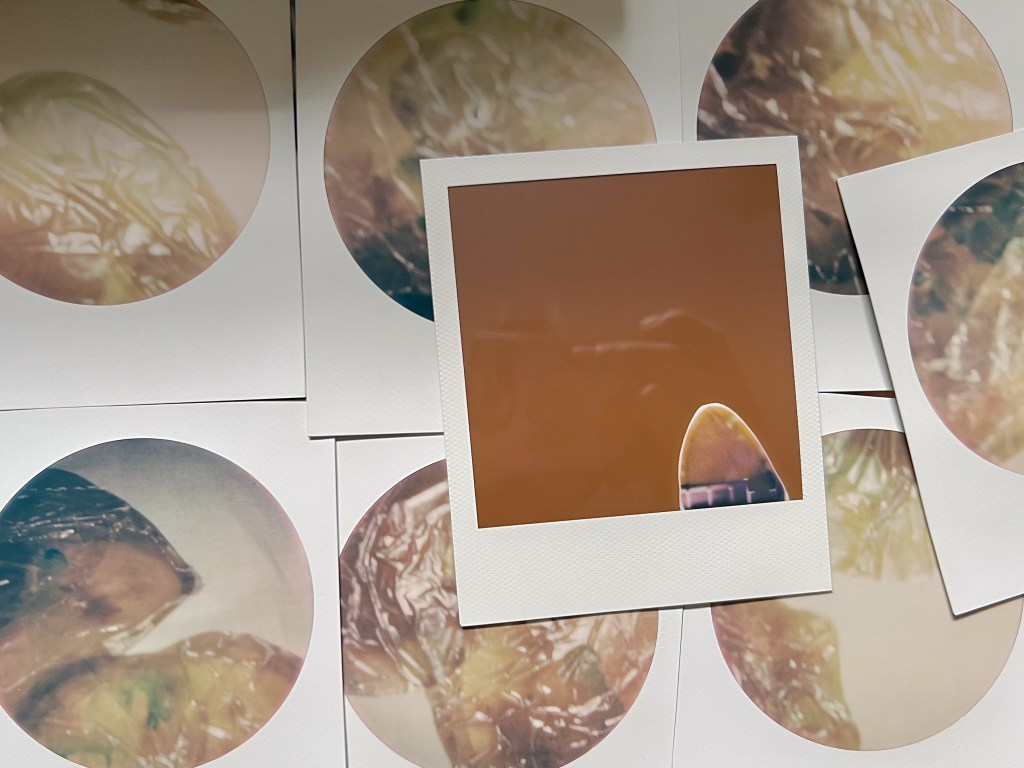
Fluidity in painting unfolds through both material and conceptual dimensions.
At a practical level, it emerges in the behavior of liquid media such as ink, resin, and stains, which operate beyond strict artistic control, embedding chance and spontaneity into the work. The movement of liquid materials between the hand and the surface creates an index of process, where each brushstroke and mark serve as evidence of a fluid event.
Conceptually, fluidity challenges linear perspectives on painting’s ontology, instead presenting it as a form of continuous arrival, where each layer and transformation reveals new temporal possibilities rather than an absolute, completed state.
 Kefan Bai